


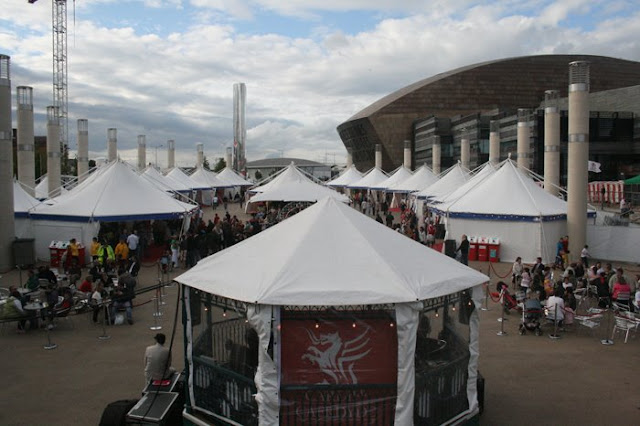
Cardiff romana, normanda, arquitectónicamente grandiosa, puerto carbonero, comercial y turística. Ciudad moderna y centenaria que en 1955 fue ratificada como la primera capital de Gales. Verdaderamente, no tiene desperdicio. Si quieres historia te vas al centro, repleto de calles y jardines victorianos y eduardianos donde habita un castillo neogótico y edificios civiles neoclásicos, amén de galerías comerciales -las más antigua es la Royal Arcade de 1856- y un mercado cubierto que data del s.XIX. Pero si lo que buscas es su parte más moderna, cruzas hacia el sur de la ciudad buscando el Puerto donde confluyen el Wales Millenium Centre, sede de la Welsh National Opera; el Techniquest, o museo de la ciencia; el BayArt Gallery, con exposiciones y venta de productos manufacturados locales ;o el centro de visitantes Cardiff Bay Visitors´Centre. Pero en cada extremo hay elementos compensatorios. Así, en el centro histórico se produce el equilibrio con el moderno Millennium Stadium, sede del equipo de rugby Welsh y donde Madonna ha iniciado su gira mundial, y en la bahía está la Norwegian Church de madera, erigida en 1868 para los marineros normandos que traían material a las minas de carbón del sur de Gales. Cuando estuvimos allí había una especia de feria de muestras en su bahía con degustaciones de productos de varios lugares del mundo. Allí descubrí lo que nunca antes había probado: el queso cheddar galés incrustado de trocitos de frambuesa. Para morirse del gusto!!! También nos traímos unas botellitas de la tradicional cidra, que se elabora en las granjas del lugar en Ralph´s Cider and Perry, de manzana y de pera.
🔼🔽🔼🔽🔼🔽🔼🔽🔼🔽
A city with category. Roman, Norman, architectonically grand, miner port, commercial and tourist city that in 1955 was ratified as the first capital of Wales. All this and more is Cardiff.
It doesn´t have any waste. If you want the historical city you go away to the center, which is completely filled with Victorian and Eduardianos gardens and streets where it is a Neogothic Castle and civil neoclassic buildings, amen of shopping centers - the most ancient is The Royal Arcade of 1856- and one covered market that dates back from the XIXth century. Otherwise, if you are looking for the modern city, you cross towards the south to meet the Port where they come together: the Wales Millenium Centre, the Welsh National´s headquarter; the Techniquest, or Science´s Museum; the BayArt Gallery, with exhibitions and sale of manufactured local products; or the Cardiff Bay Visitors' Centre. But in every end there are compensatory elements. This way, in the historical center the balance takes place with the modern Millennium Stadium, headquarter of the Welsh rugby team and where Madonna has initiated her world tour. In the bay, the compensatory element, is the Norwegian Church made of wood, and raised in 1868 for the Norman sailors who were bringing material to the coal mines of the south of Wales. When we were there there was a trade fair in the bay with products degustations of several places around the world. There I discovered what I had never tried before: the Welshman cheddar cheese incrusted with bits of raspberry. To die of the taste!!! We also bought a few bottles of the traditional cider elaborates in the in Ralph's Cider local farms.
** More pics and videos / Mas fotos y vídeos en mi Instagram **





El Castillo de Cardiff
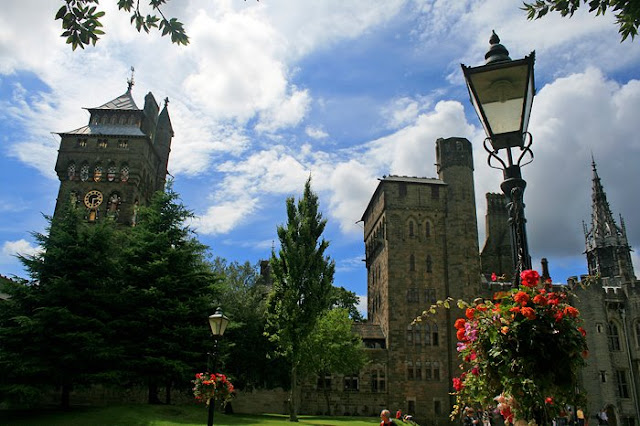
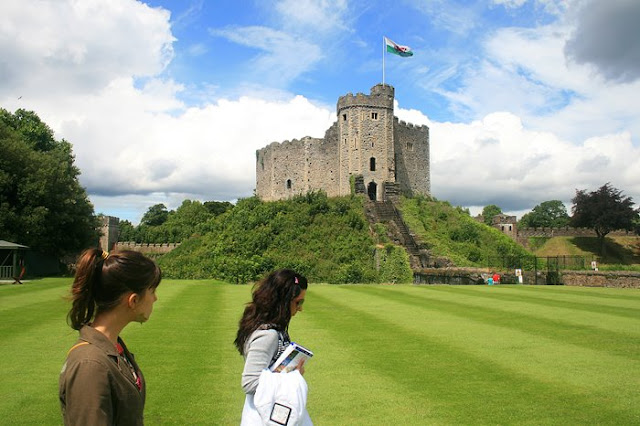
Primero fue una fortaleza romana, cuyos restos están hoy día separados de la parte moderna del castillo por un muro de piedra roja. En el s.XII se construyó se construyó una torre dentro de las ruinas romanas y 700 años más tarde el castillo va de mano en mano hasta llegar a las del acaudalado John Stuart en 1776, hijo del conde de Bute que mandó construir una maravillosa mansión de aspecto medieval y romántico -que lamentablemente no te dejan fotografiar cuando haces la visita. Un fastidio vamos-; y de la que el Salón de Fumar de Verano, el Salón de Banquetes, la Terraza y la Biblioteca son sus hits.
Cardiff ´s Castle
First at all it was a Roman fortress, which remains are separated today from the modern part of the castle by one red stone wall. In the XIIth a tower was constructed inside the Roman ruins and 700 years later the castle goes of hand in hand up to there coming to those of the wealthy John Stuart in 1776, count of Bute´s son who gave the orders to construct a wonderful mansion of medieval and romantic aspect - that lamentably they do not leave you to come out in photographs when you do the visit. A nuisance we go-; The Smoking Summe´s lounge, the Banquets´lounge, the Terrace and the Library are the castle´s hits.


¡De compras!
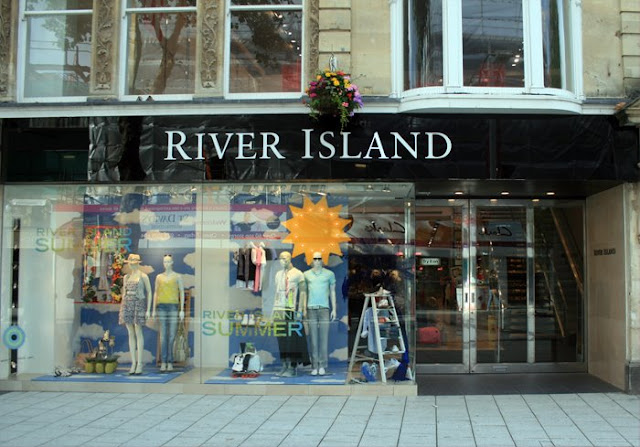
Como no podía ser de otra manera, hubo tiempo para visitar tiendas: New Look, Primark, River Island, Top Shop... Os muestro los dos bolsos que me traje. El de rayas de River Island - de esa tienda me lo hubiese llevado todo- y el tricolor de Primark.
Shopping
There were time for shopping. I got this two purses from River Island -the stripped one- and the tricolour from Primark.


 El origen de Chipiona se remonta a los Tartesos, cuando su población se asentaba en terrenos próximos a la Piedra de Salmedina. Esta civilización debió extenderse entre los siglos IX y VI a.C., afianzando su Imperio en el sur de España, concretamente en lo que hoy es Chipiona, el Puerto de Santa María, El Portal y Trebujena, y que ellos llamaron la isla Kartare.
 Diríais que estoy en England o en la India...??? Con este imagen es difícil de adivinar no? Estoy en Brighton, ciudad al sureste de England donde se rodó Quadrophenia (1974), peli sobre la cultura mood de los 70s en la que trabajaba mi cantante favorito Sting -Por cierto, alguien ha ido a algunos de los conciertos de The Police? Que me lo cuente please. Yo estuve en los conciertos del solista en Madrid y en Granada pero no del grupo-.


 Para llegar a la ciudad de Eugène Boudin y de Satie hay que cruzar un paisaje que es el original de los cuadros impresionistas que luego contemplará el visitante en su museo, que lleva el nombre del afamado pintor.